








The Strength of One Community: Reflections on Homecoming

This year’s Homecoming highlighted the unique strength of a JK–12 school community as students of all ages connected through pep rallies, athletics, and collaborative performances. When unscripted downpours hit, families and fans stayed to help, adapt, and cheer, proving that true community spirit thrives in how we come together through every moment. This story captures how traditions, cross-grade mentorship, and shared resilience make the Husky experience truly exceptional.
Read MoreUpgrading a Powerhouse: New Hardware for Our Nationally Ranked Cybersecurity Teams

Blog Summary: Flint Hill Upper School’s national top-two-percent cybersecurity program recently received a major hardware upgrade through a generous donation from the Schaffer family. Working alongside faculty and tech staff, student Henry Wang dedicated hundreds of hours to customizing the new server’s user interface and backend tools, saving the school thousands in software fees. This…
Read MoreProducing a Final Rough Draft: Flint Hill’s Award-Winning Literary Legacy
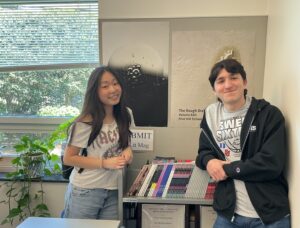
The 25th volume of The Rough Draft, Flint Hill’s Upper School literary magazine, highlights student writing, poetry, and art through a rigorous, student-led revision and design process. Celebrating its Silver Crown Award win from the Columbia Scholastic Press Association (CSPA), the publication showcases the unique artistic voices and collaborative spirit of the Flint Hill community.
Read MoreVeni, Vidi, Vici: Why the ‘Dead Language’ is More Alive Than Ever at Flint Hill
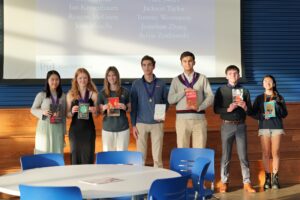
Blog Summary: Flint Hill Upper School Latin students secured victory in the Independent School Division of the Classical Association of Virginia Latin Tournament for the second consecutive year. Claiming 6 of the top 18 statewide prizes across beginner, advanced, and literature divisions, Husky scholars demonstrated exceptional mastery of complex grammar, syntax, and authentic Latin literature.…
Read MoreWhy an Authentic High School Experience Matters

In many high-achieving school communities, what should be a formative period of growth can quietly turn into a performance — a series of strategic choices made solely with a future outcome in mind. But an authentic high school experience matters more than a perfectly optimized one. Not just for college outcomes, but for the kind of people students become.
Read MoreThe Art of the Pitch: Huskies Take Meaningful Risks at FBLA Regionals

Blog Summary: Flint Hill Upper School students showcased entrepreneurial bravery and sharp business acumen at the Future Business Leaders of America (FBLA) Regional Competition. Notably, our students represented the school with pride at the Flint Hill FBLA regional competition, putting their skills to the test. By crafting persuasive pitches, embracing meaningful risks, and applying real-world…
Read MoreBeyond Translation: From Spanish Student to Bilingual Advocate
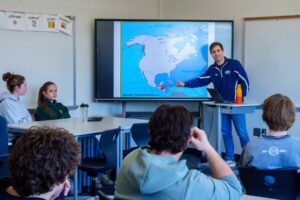
Blog Summary: Flint Hill Upper School’s modern language curriculum empowers students to go beyond basic translation and build meaningful cultural fluency and civic engagement. Through immersive Spanish coursework, real-world service opportunities, and deep conversational practice, students transform into confident bilingual advocates equipped to impact local and global communities. This holistic approach reflects Flint Hill’s mission…
Read MoreStronger Together: Highlights from the Girls & Women In Sports Forum

Blog Summary: Flint Hill School hosted the Girls and Women in Sports Forum, bringing together student-athletes, coaches, and guest panelists to celebrate female athletics, leadership, and community support. Through engaging discussions on representation, mental resilience, and mentorship, participants explored how sports build lifelong confidence and strength both on and off the field. The event highlighted…
Read MoreUpper School Student Leadership Opportunities
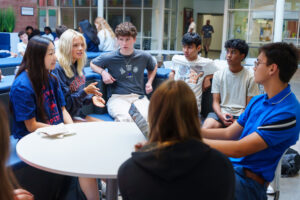
Blog Summary: Flint Hill Upper School provides a diverse landscape of student leadership opportunities — from Student Council and Advisory Leaders to Honor Council and club officers — designed to foster authentic voice, decision-making, and community impact. By taking on real responsibility and receiving mentorship from faculty, students learn to lead with empathy, accountability, and…
Read MoreHuskies Hack Their Way to the Top 2% Nationally in CyberPatriot Competition
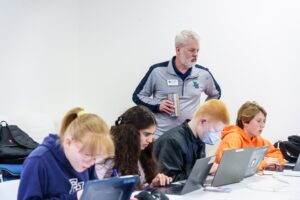
Blog Summary: Flint Hill Upper School cybersecurity teams demonstrated exceptional technical expertise and rapid-fire collaboration by placing in the top 2% nationally in the CyberPatriot competition. Through months of rigorous preparation, critical thinking, and hands-on defense strategy, Husky students successfully protected virtual networks against real-world security vulnerabilities. This outstanding national achievement highlights Flint Hill’s commitment…
Read More